
 View on AmazonAs an Amazon Associate, I earn from qualifying purchases.
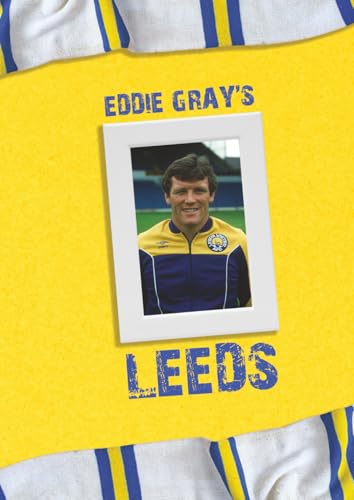
Eddie Gray: the magician of Elland Road
Few people have given as much of their lives to Leeds United as Eddie Gray. A dazzling left winger in Don Revie’s great team, he later managed the club twice and served in coaching, youth-development and ambassadorial roles. His story spans the trophies of the 1960s and 1970s, the difficult years in the Second Division and the financial crisis of the early 2000s.
A Scottish teenager with extraordinary talent
Born in Glasgow on 17 January 1948, Gray joined Leeds as a teenager in 1965. He made his first-team debut on New Year’s Day 1966 and scored against Sheffield Wednesday. He would spend his entire senior playing career at Elland Road, becoming one of the most admired wingers in English football.
Gray’s balance, close control and ability to change direction at speed made him a nightmare for defenders. His style brought artistry to a team sometimes remembered chiefly for its physical competitiveness. Injuries interrupted his career, but at his best he could transform a match with a single run.
The unforgettable Burnley goals of 1970
One match captures Gray’s talent particularly well: Leeds’ 5–1 victory over Burnley in April 1970. He scored twice, including a remarkable solo effort in which he dribbled past several defenders before finishing. The goal remains a favourite in compilations of Leeds’ greatest moments, an example of technique and imagination rather than sheer power.
Silverware with Don Revie’s Leeds
Gray was part of the Leeds sides that won the 1968 League Cup, the 1968 and 1971 Inter-Cities Fairs Cups, the 1968–69 and 1973–74 First Division championships and the 1972 FA Cup. Injury restricted his contribution in the 1973–74 title season, but his wider importance to the Revie era was beyond question.
He also featured in the controversial 1975 European Cup Final against Bayern Munich under Jimmy Armfield. Across his Leeds playing career, the club credits him with 579 appearances and 69 goals. Gray won 12 caps for Scotland, scoring three international goals.
Player-manager after relegation: 1982–85
Following relegation under Allan Clarke in 1982, Leeds turned to another former Revie player. Gray became player-manager in July 1982, initially continuing to make appearances before retiring as a player. Crucially, Leeds were competing in the Second Division, not the First Division, throughout his first managerial spell.
The club faced financial constraints and the challenge of rebuilding a squad accustomed to top-flight football. Gray sought to develop younger players rather than rely solely on expensive transfers. Talents including John Sheridan, Denis Irwin, Neil Aspin, Scott Sellars and Tommy Wright gained important first-team experience during this period. Veteran Peter Lorimer also returned to provide experience.
Leeds finished eighth in 1982–83, tenth in 1983–84 and seventh in 1984–85. The youngsters showed promise, but promotion remained elusive. Gray was dismissed in October 1985 and succeeded by former captain Billy Bremner. His departure was unpopular with many supporters who admired both his loyalty and the team he was developing.
Coaching, youth development and a return to Leeds
After leaving the Leeds manager’s job, Gray worked elsewhere in football, including managerial spells at Rochdale and Hull City. He later returned to Elland Road in coaching and youth-development roles. His knowledge of the club and ability to work with young players made him a valuable presence through changing ownership and managerial regimes.
A second spell in charge during the 2003–04 crisis
Gray was asked to lead the first team again in November 2003 after the dismissal of Peter Reid. By then Leeds were fighting for Premier League survival amid severe financial problems. The squad had been weakened by the departures of important players, and the club’s difficulties extended far beyond the touchline.
Gray worked to steady the team, but he could not prevent relegation at the end of the 2003–04 season. Leeds’ 14-year stay in the top flight was over. The club subsequently appointed Kevin Blackwell to oversee the next chapter in the Championship.
Mr Leeds: an enduring connection
Gray remained closely associated with Leeds as a club representative and ambassador. His family’s links to Elland Road are also remarkable: his brother Frank Gray, nephew Andy Gray and later generations of the family have all been part of the club’s story.
In 2026, Leeds United recognised Eddie’s extraordinary service with a Lifetime Achievement Award. His managerial spells were shaped by two periods of crisis, yet neither diminished his standing as one of the club’s great figures. For supporters, Eddie Gray represents both the artistry of the Revie years and a lifelong commitment to Leeds United.
Further reading and historical sources
- Leeds United: Eddie Gray player profile and honours
- Leeds United: Eddie Gray receives Lifetime Achievement Award (2026)
- National Football Museum: Eddie Gray Hall of Fame profile